

Why Most Small Businesses Struggle to Scale
(And How to Fix It)
Sandeep, Founder of SAYZIO | February 17, 2026 Reading Time: 12–14 Minutes

Large Call to Action Headline
Introduction
Most small businesses do not struggle because of lack of opportunity. They struggle because they cannot handle growth. When revenue starts increasing and leads begin flowing in, operations become more complex. Messages pile up, follow-ups are missed, customer data gets scattered across tools, and marketing efforts lose consistency. What once felt manageable suddenly becomes overwhelming. Growth turns into stress instead of success. Many entrepreneurs assume scaling simply means generating more leads and closing more deals. But what they discover is that more leads without proper systems only create more chaos. If your business depends heavily on manual replies, spreadsheets, and disconnected tools, scaling will always feel difficult. The real issue is not demand; it is structure. In this article, you will learn what AI business automation really means, why most small businesses hit a growth ceiling, how CRM and automation improve conversions, a real-world use case example, and practical steps you can take to implement automation in your own business. By the end, you will understand why systems — not effort — determine scalability.

Why Small Businesses Struggle to Scale
Small businesses typically begin with manual systems. In the early stages, this approach works because volume is low. The founder can personally respond to every inquiry, track conversations manually, and manage tasks without structured workflows. However, as demand increases, these informal systems start breaking down. One of the biggest scaling problems is slow lead response. When a potential customer reaches out, their interest is at its highest point. If the business responds immediately, the chances of conversion increase significantly. But many small businesses check emails periodically, reply to social media messages only when available, or overlook website inquiries altogether. Delayed responses reduce trust and increase the likelihood that prospects choose competitors. Another common issue is tool fragmentation. Many businesses use separate platforms for CRM, email marketing, landing pages, SMS communication, and payments. While each tool works individually, they often do not integrate seamlessly. This leads to duplicated data, manual data entry, missed follow-ups, and unclear reporting. Instead of improving efficiency, multiple tools increase operational complexity. Inconsistent follow-ups also contribute to stagnation. Most sales do not happen during the first interaction. Customers need reminders, nurturing content, and reassurance before making a decision. Manual follow-up processes rely on memory and discipline, and when the business becomes busy, follow-ups are often forgotten. This results in lost revenue opportunities that remain invisible. Finally, many business owners lack clear performance visibility. Without centralized analytics, they cannot accurately determine which marketing campaigns generate qualified leads, where prospects drop off, or what their true conversion rate is. Decisions are based on assumptions rather than data. Guesswork may sustain a small business, but it cannot scale one.
How CRM & Automation Improve Conversions
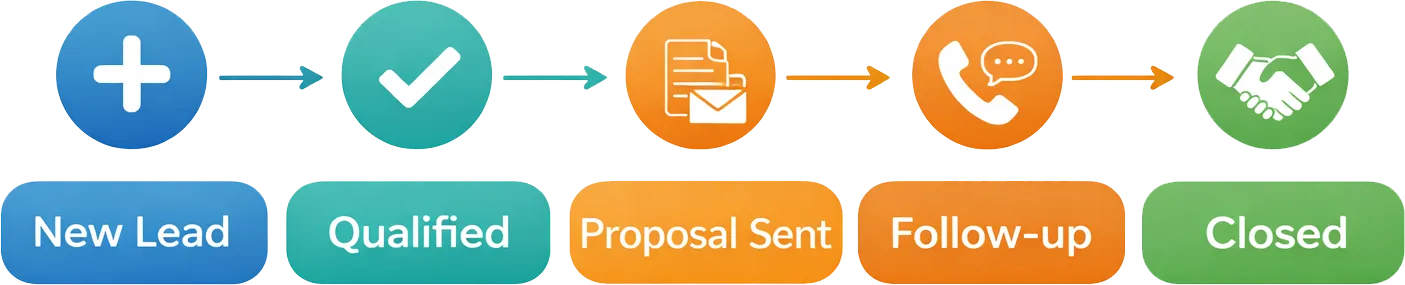
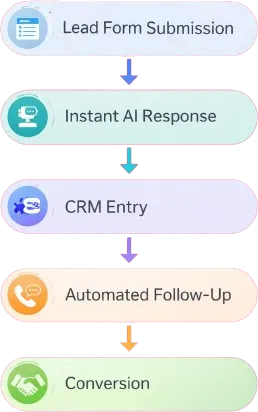
A CRM system centralizes customer and lead information in one organized database. When combined with automation, it becomes a powerful growth engine. Instead of manually tracking conversations and opportunities, the CRM organizes every lead into structured pipeline stages. This ensures that no potential deal is forgotten. Automation enhances the CRM by triggering actions based on predefined rules. When a lead enters the system, automated messages can be sent instantly. Follow-up sequences can nurture prospects over days or weeks. Appointment reminders can be scheduled automatically. If a prospect engages with a message, the system can trigger additional actions without manual effort. This level of consistency significantly improves conversions. Every lead receives immediate attention. Every prospect enters a structured nurturing process. Sales teams gain visibility into pipeline stages. Business owners can monitor conversion metrics and optimize campaigns accordingly. Platforms such as SayZio integrate AI-powered automation, CRM management, multi-channel marketing, workflow systems, and analytics into one centralized environment SayZio is an AI. Instead of relying on disconnected tools, businesses can operate within a unified structure that supports sustainable growth. When systems are aligned, conversion rates improve not because traffic increases, but because efficiency increases.
Real-World Use Case
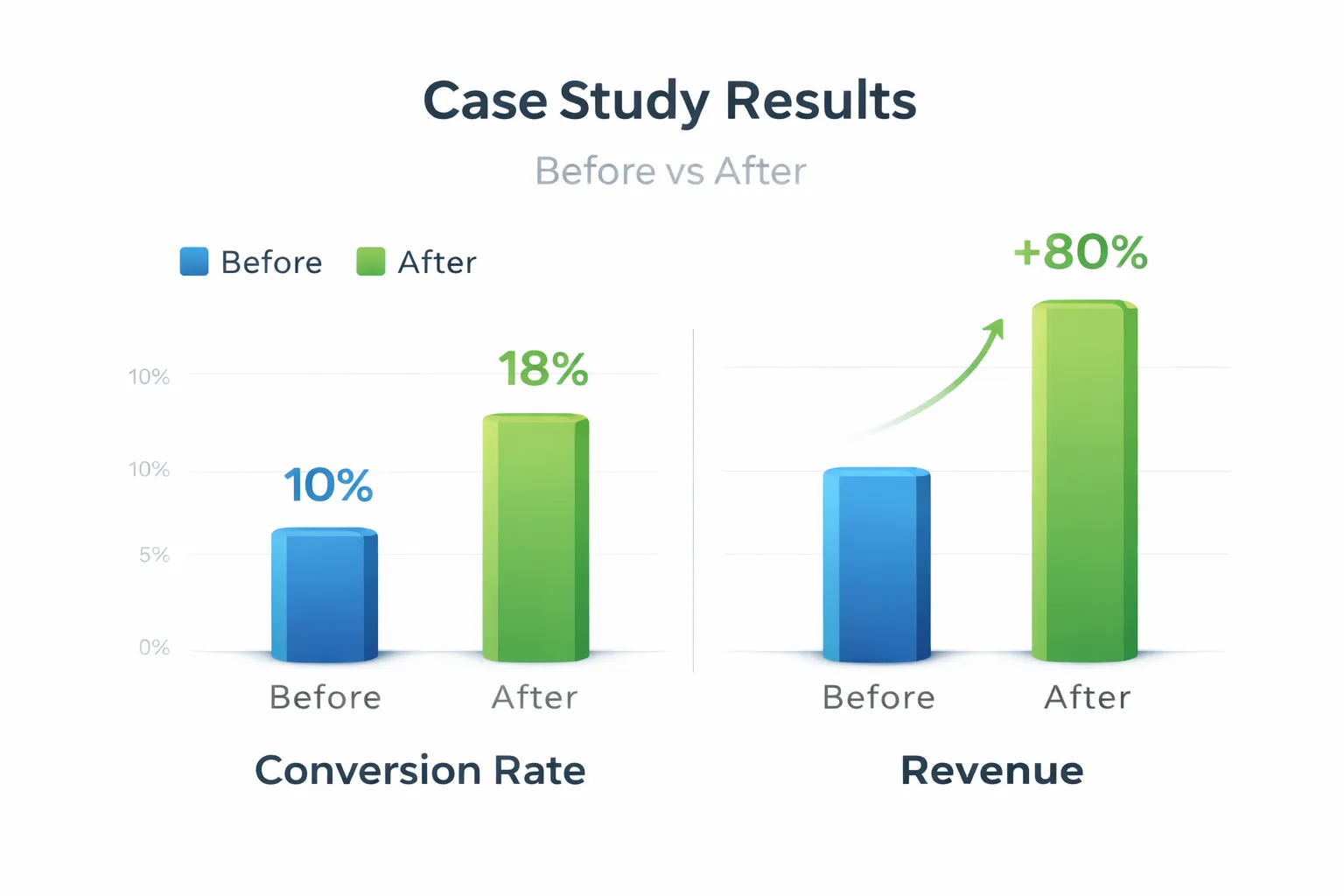
Consider a service-based business generating one hundred leads per month through digital advertising and website forms. Before implementing automation, the business responds to inquiries manually. Some leads receive delayed responses. Follow-ups are inconsistent. There is no structured CRM pipeline. The conversion rate remains at approximately ten percent, resulting in ten new customers per month. After implementing AI-driven CRM and automation, every lead receives an instant response. A structured seven-step follow-up sequence nurtures prospects automatically. Leads are tracked through defined pipeline stages. Sales conversations are documented centrally. Analytics provide visibility into performance. Without increasing advertising spend, the conversion rate increases to eighteen percent. The same one hundred leads now generate eighteen customers per month. Revenue grows substantially, and administrative workload decreases. The only change was systemization. This example illustrates a crucial point: scaling does not always require more traffic. It requires better structure.
Implementation Steps
Implementing AI business automation begins with centralizing lead capture. All inquiries from websites, social media platforms, messaging apps, and advertisements should flow into one system. This eliminates data loss and ensures complete visibility. Next, establish clear CRM pipelines. Define stages such as new lead, qualified, proposal sent, negotiation, and closed. Structured pipelines prevent deals from being forgotten. Then, create automated follow-up sequences. These may include welcome messages, educational content, appointment reminders, promotional offers, and re-engagement messages. Automation ensures consistent communication regardless of workload. Enable instant AI responses to acknowledge inquiries immediately. Speed builds trust and improves engagement. Finally, monitor analytics dashboards to track performance metrics and refine strategies. Data-driven optimization strengthens scalability. Integrated platforms like SayZio support these capabilities within a single ecosystem, reducing fragmentation and improving operational efficiency.

Start Automating Your Business Today with Sayzio
If you are losing leads, missing follow-ups, or managing disconnected tools, it is time to centralize your operations. By combining CRM, AI automation, marketing tools, and analytics into one platform, you can eliminate operational chaos and build a scalable foundation for growth.
Case Study Example
A consulting firm generating digital leads faced stagnation despite steady advertising investment. Leads entered through website forms and social media ads, but responses were manual and inconsistent. There was no centralized CRM tracking, and follow-ups depended entirely on individual effort. Conversion rates remained around twelve percent. After implementing automation, all lead sources were integrated into one CRM system. AI-powered instant responses were enabled. A structured ten-day nurturing sequence was created. Sales proposals were tracked through defined pipeline stages. Performance dashboards provided real-time insights. Within ninety days, the business achieved a one hundred percent lead response rate. Follow-up consistency improved significantly. Conversion rates increased to twenty percent. Monthly revenue rose by thirty-five percent, and administrative workload decreased substantially. The company did not increase advertising spend. It improved structure.
Conclusion
Most small businesses struggle to scale because growth amplifies operational weaknesses. Manual systems cannot sustain increasing demand. Without automation, leads are missed, follow-ups break down, data becomes fragmented, and decision-making lacks clarity. AI-driven CRM and automation systems transform operations by ensuring speed, consistency, and centralized visibility. Businesses that adopt structured systems respond faster, convert more effectively, retain customers longer, and operate with reduced stress. Scaling is not about working harder. It is about building smarter infrastructure. Businesses that embrace intelligent automation today position themselves for predictable, sustainable growth in the future. The difference between stagnation and scale is not effort. It is structure.

Ready to launch smarter with Sayzio?
Start with our Starter Plan and explore the full platform with a 7-day trial. Upgrade anytime as your business grows
No long-term contracts
Upgrade or cancel anytime
Secure payment processing

SAYZIO is an AI-powered all-in-one platform to automate marketing, sales, CRM, and operations by helping businesses grow on autopilot.
© 2025 SAYZIO. All rights reserved.
.webp)
.webp)
.webp)